Knowledge Beyond Documents: FAIR Ontologies for Humans and Machines
The FAIR principles have significantly improved the publication and reuse of digital resources, promoting data that are Findable, Accessible, Interoperable, and Reusable. However, as AI-based systems increasingly consume and generate knowledge, achieving machine-actionable interoperability requires not only FAIR data but also FAIR ontologies. In this keynote, I will argue that FAIR ontologies are a cornerstone of machine-actionable knowledge. Beyond enabling semantic interoperability, they support knowledge integration, discovery, and explainability across digital infrastructures. I will present recent advances in ontology engineering, discussing practical approaches, tools, and best practices for designing and publishing FAIR ontologies, together with current challenges such as documentation, metadata, versioning, quality assessment, governance, modularity, reuse, and long-term sustainability. Ultimately, I will argue that moving from FAIR Data to FAIR Knowledge requires treating ontologies as first-class FAIR digital resources.
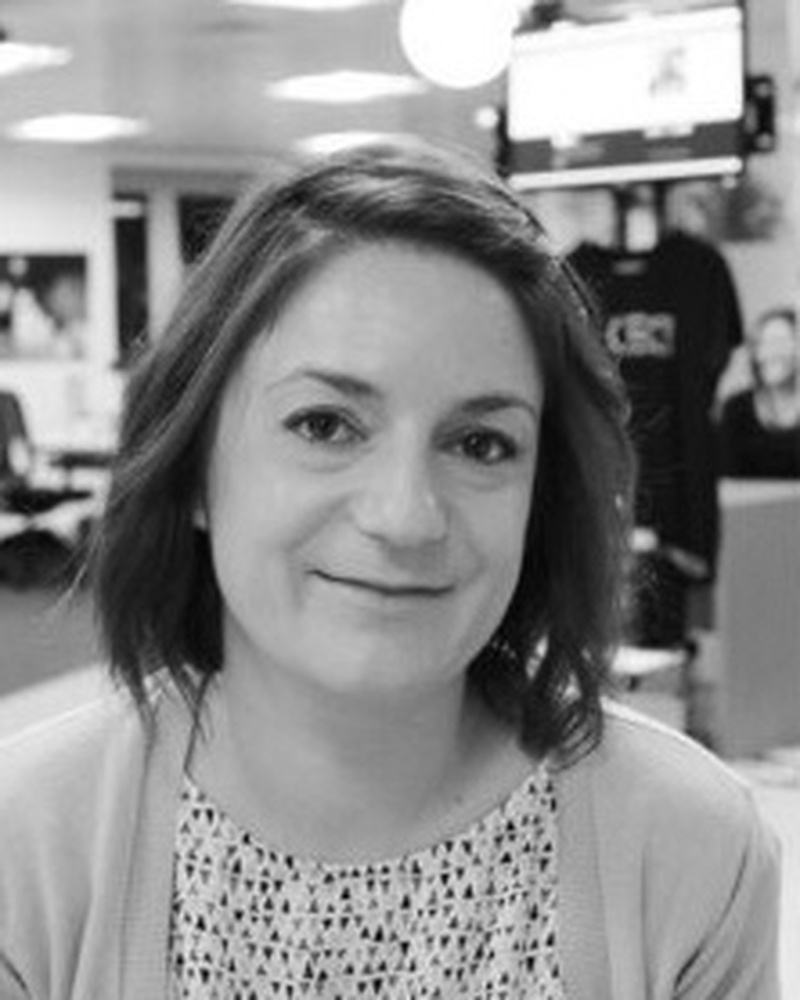
María Poveda-Villalón
María Poveda-Villalón is an Associate Professor in the Department of Artificial Intelligence at Universidad Politécnica de Madrid (UPM) and a member of the Ontology Engineering Group (OEG). Her research focuses on ontology engineering, semantic technologies, and knowledge representation, with particular interests in ontology quality, FAIR ontologies, semantic interoperability, and the application of generative AI to ontology engineering. She is the creator of OOPS! (Ontology Pitfall Scanner!), one of the most widely used tools for ontology quality assessment, co-creator of FOOPS! (FAIR Ontology Evaluation Service), and main author of the LOT methodology for ontology engineering. Her work has contributed to methods, best practices, and tools for engineering, evaluating, and publishing high quality, reusable ontologies. She has participated in numerous national and European research projects, organized several international workshops on ontology engineering and semantic technologies, and actively contributes to the development of semantic standards through ETSI (European Telecommunications Standards Institute), where she is involved in the development and evolution of the SAREF ontology and its domain extensions.
Temporal Intelligence in Language Technologies: Modeling, Retrieval, and Reasoning
Time is central to how we understand the world. It shapes how we interpret events, construct narratives, and reason about change, causality, and evidence. In this talk, I will first examine how well large language models handle temporal information and temporal reasoning, an essential but still less explored dimension of language intelligence. I will then discuss recent advances in incorporating temporal awareness into language technologies, including time-aware representation learning, retrieval from evolving document collections, and the development of new resources for training and evaluation. I will also introduce temporal reasoning-oriented question answering and retrieval benchmarks that highlight the challenges of retrieving time-sensitive information, answering complex temporal questions, and reasoning over changing evidence. The talk will conclude with open challenges for building language technologies that can better understand, retrieve, and reason over information across time.
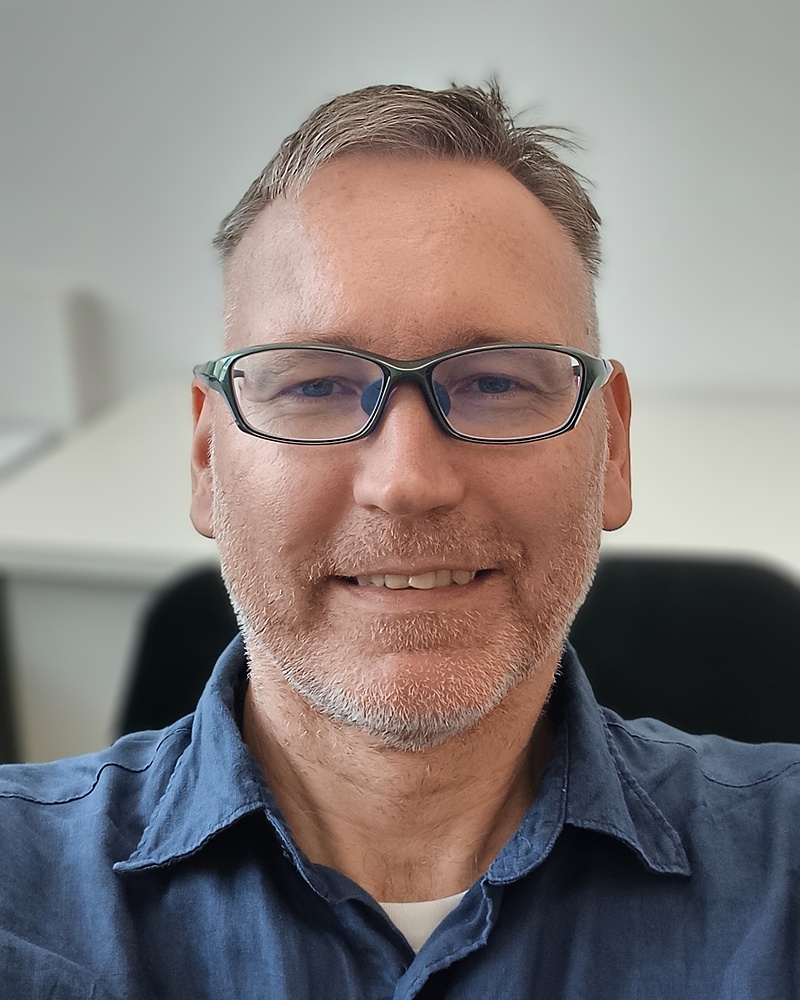
Adam Jatowt
Adam Jatowt is a Professor in the Department of Computer Science and Deputy Head of the Digital Science Center at the University of Innsbruck. He obtained his PhD in Information Science and Technology from the University of Tokyo in 2005 and subsequently worked for 14 years at Kyoto University. His research focuses on information retrieval and natural language processing, with particular emphasis on temporal information. He is a recipient of the Friedrich Wilhelm Bessel Research Award from the Alexander von Humboldt Foundation and the International Excellence Fellowship from the Karlsruhe Institute of Technology. He has served as Program Committee Chair of ECIR 2026, ICONIP 2022, ICADL 2019, and JCDL 2017, and as General Chair of TPDL 2019 and ICADL 2020. He is currently an Associate Editor of ACM TOIS and JASIST. From 2019 to 2022, he served as Steering Committee Chair of the ICADL conference. He has received Best Paper, Best Short Paper, and Best Demo Paper awards at ECIR, as well as the Vannevar Bush Best Paper Award at JCDL.
Transitive Credit Allocation for Heterogeneous and Dynamic Scholarly Graphs
Citation counts and the h-index stop at the first link, so the methods, datasets, and software behind a cited work receive nothing from the citation. Scholarly graphs now link papers to datasets, software, clinical trials, and patents through typed relations, and versioning makes these graphs dynamic and can introduce cycles.
This talk presents Transitive Credit Allocation (TCA). TCA is joint work with Peter Buneman, Mirco Cazzaro, Matteo Lissandrini, and Laura Menotti. Each citation brings one unit of credit to the cited work. Each work keeps a share of the credit it receives, its retention, and passes the rest equally to the works it cites. The model conserves credit in citation units, returns citation counts at 100% retention, and sends credit further back as retention decreases. The same rule applies to datasets, software, and authorized versions, and credit circulating in a cycle settles because every work keeps a positive share.
On a citation graph of about 40 million papers, patents, and clinical trials from the PubMed Knowledge Graph, we computed author h-indices at four retention levels from the credit each paper keeps. At 25% retention, 91% of the authors in the top 500,000 under both citation counting and TCA see their h-index fall, while 119 gain 50 points or more. Foundational authors climb, and a 1955 paper with 19 citations receives 5,448 units of credit from later work.
The talk closes with open questions on setting the retention, on the quality of data citations and scholarly graphs, and on crediting the data behind LLM answers.
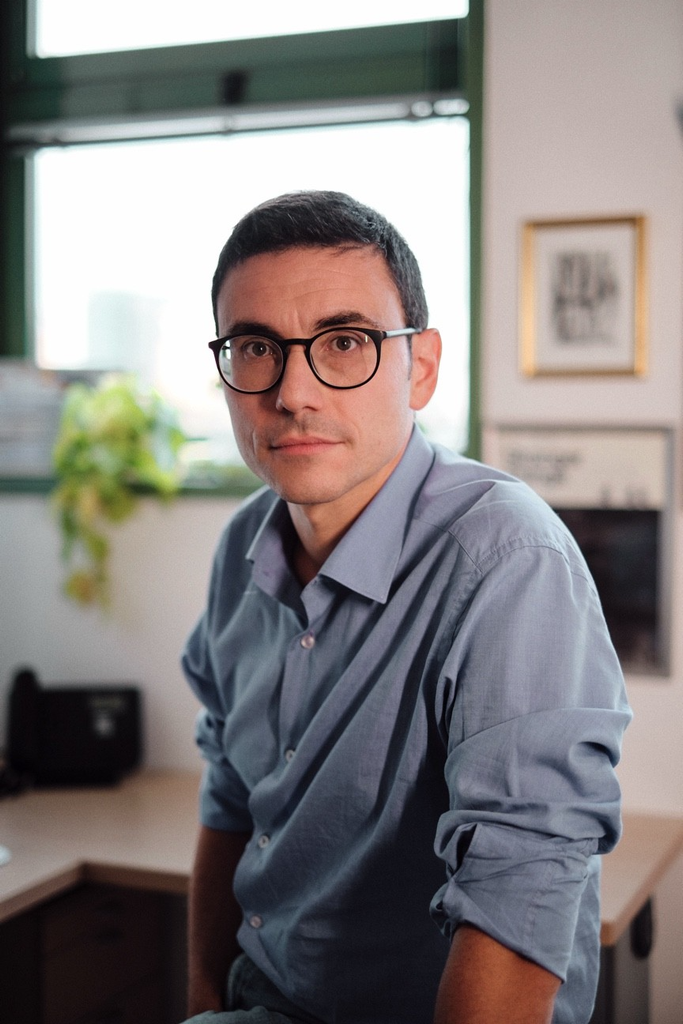
Gianmaria Silvello
Gianmaria Silvello is a Full Professor of Computer Engineering in the Department of Information Engineering at the University of Padua. He works on databases, knowledge representation, information retrieval, and digital libraries. For more than a decade he has studied how to cite data and how to measure its impact, with papers in PODS, JASIST, and Communications of the ACM. He has published more than 250 peer-reviewed papers. He coordinates HEREDITARY, a Horizon Europe project that integrates multimodal health data through semantic technologies and federated analytics to study the gut-brain interplay. He was General Chair of TPDL 2022 in Padua and has chaired the TPDL Steering Committee since 2025. His talk, “Transitive Credit Allocation for Heterogeneous and Dynamic Scholarly Graphs,” asks why and how credit should travel from a paper to the methods, datasets, and software it builds on, and what changes when it does.